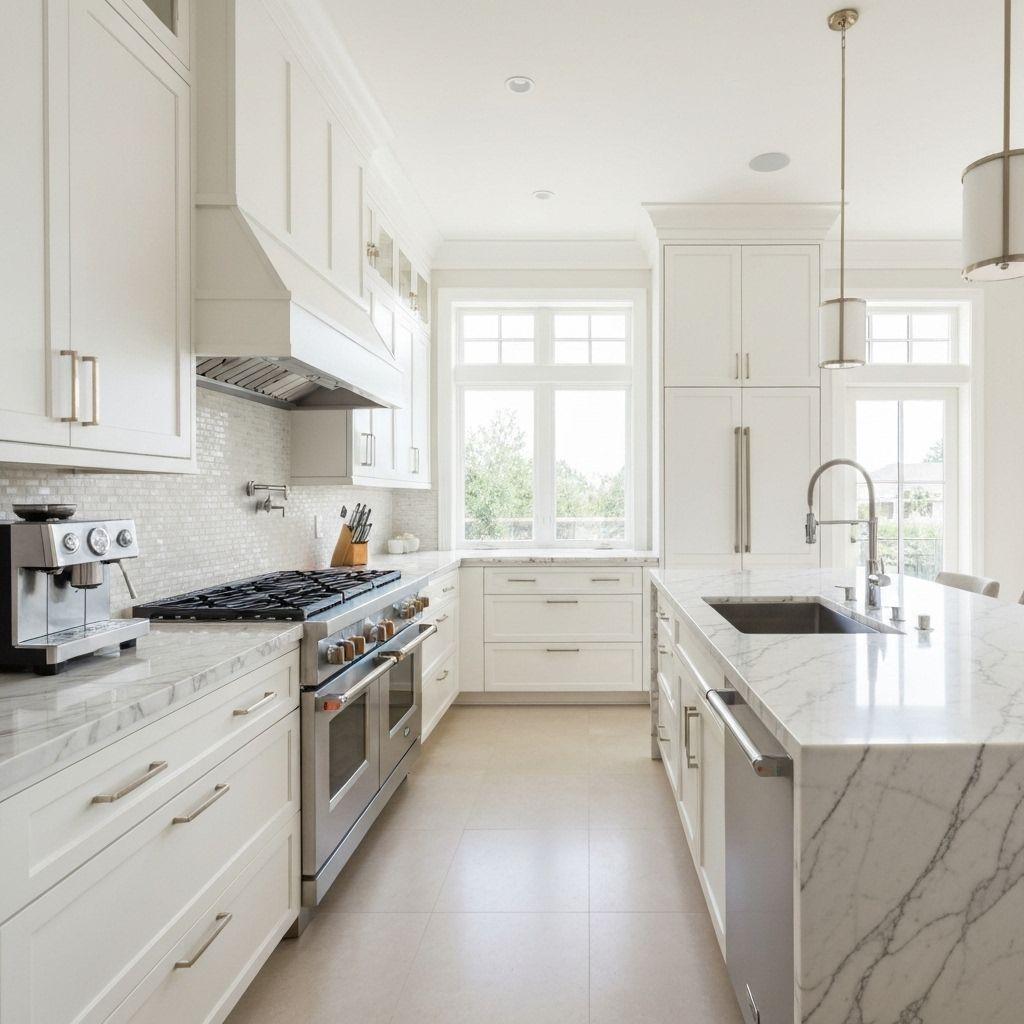
How Much Does a Kitchen Remodel Cost in Seattle? 2026 Price Guide
Real 2026 kitchen remodel costs for Seattle and Eastside homes, broken down by tier, by line item, and by the surprises we find behind the drywall. Written by a licensed local contractor.
Nobody wants to be the contractor who says "it depends." So here are actual numbers: what a kitchen remodel costs in Seattle and on the Eastside in 2026, where every dollar goes, and which line items quietly blow up budgets. These are the ranges we quote from, not national averages scraped off a home-improvement site.
The short answer
For a typical Seattle-area kitchen of 150 to 250 square feet, expect:
| Tier | 2026 range | What it buys |
|---|---|---|
| Refresh | $38,000 – $60,000 | Same footprint, new semi-custom cabinets, quartz counters, appliances, lighting, flooring |
| Full remodel | $70,000 – $130,000 | New layout, relocated plumbing and electrical, custom or upgraded cabinetry, tile, island |
| Structural / open concept | $140,000 – $250,000+ | Walls removed, beams engineered, new windows, panel upgrade, high-end finishes throughout |
If your number lands below the Refresh range, you are looking at a cosmetic update — paint, hardware, counters on existing boxes — not a remodel. That is a perfectly good project. It is just a different one, and it should be priced that way.
Why Seattle costs more than the national number
Every cost guide you read online quotes a national median somewhere near $30,000. Here is why our market does not match it:
- Labor rates. Licensed plumbers, electricians, and finish carpenters in King County bill 30 to 50 percent above the national average. That is most of the gap right there.
- Older housing stock. A huge share of Seattle homes were built before 1960. Knob-and-tube wiring, galvanized supply lines, and undersized panels are normal here, and code says we cannot leave them alone once we open the wall.
- Permits and inspections. A kitchen that moves plumbing or electrical needs permits from SDCI or your city building department. Budget $1,200 to $3,500 in fees plus the schedule time.
- Site access. A hillside home in Queen Anne, a condo in Belltown with a freight elevator reservation, or a narrow Ballard lot all add labor hours nobody thinks about until demo day.
- Seismic requirements. Removing a bearing wall in Washington means engineered drawings and hardware, not just a beam and hope.
Where the money actually goes
For a $95,000 full kitchen remodel in Bellevue last year, this was the real breakdown:
| Line item | Share | Cost |
|---|---|---|
| Cabinetry | 29% | $27,600 |
| Labor (all trades) | 24% | $22,800 |
| Countertops and backsplash | 12% | $11,400 |
| Appliances | 11% | $10,500 |
| Electrical and lighting | 7% | $6,650 |
| Plumbing | 6% | $5,700 |
| Flooring | 5% | $4,750 |
| Permits, disposal, protection | 3% | $2,850 |
| Design and project management | 3% | $2,750 |
Cabinetry is always the biggest single number, which is why it is the first place to adjust when a budget is tight. Moving from full custom to a quality semi-custom line with the same door style and drawer hardware can save $8,000 to $15,000 and almost nobody can tell the difference two years in.
The five choices that move the number most
1. Are you moving the sink?
Keeping plumbing where it is can save $4,000 to $9,000. Moving a sink to an island in a home on a slab or over a finished basement means opening the floor, re-routing drain lines at the right slope, and patching everything back. It is often worth it. Just know it is a real line item and not a free design choice.
2. Cabinets: stock, semi-custom, or custom?
Stock runs roughly $180 to $320 per linear foot installed. Semi-custom lands around $400 to $650. Full custom local millwork starts near $850 and climbs. In a 25-foot kitchen, that spread is over $15,000.
3. Countertop material
Quartz is $75 to $130 per square foot installed and is what most of our clients choose. Natural quartzite and premium marble run $140 to $250. A dramatic waterfall island edge adds a full extra slab. We cover the tradeoffs in our guide to choosing the right countertop material.
4. Is the panel big enough?
Induction ranges, dedicated appliance circuits, and under-cabinet lighting all draw power. If your home still has a 100-amp panel, expect $3,500 to $6,500 for a service upgrade. We check this at the consultation so it never appears as a surprise later.
5. Are walls coming down?
Removing a bearing wall for an open plan runs $8,000 to $25,000 depending on span, whether a flush beam is required, and what is living inside that wall. In a two-story home, plumbing stacks and HVAC ducts hide there more often than not.
Our rule of thumb for planning: hold back 10 to 15 percent of your budget as contingency. On a pre-1970 Seattle home, make it 15. If we do not need it, you keep it — we do not bill contingency we did not spend.
What the surprises usually are
These are the four we find most often once the drywall is off, with what they typically cost to correct:
- Knob-and-tube or ungrounded wiring in the walls we opened: $2,500 – $7,000
- Rotten subfloor under a dishwasher or sink from a slow leak nobody noticed: $900 – $3,500
- Galvanized supply lines that need replacing with PEX or copper: $1,800 – $5,000
- Out-of-level floors and out-of-plumb walls in older homes, which cabinetry has to be scribed to: $600 – $2,500
None of these are anyone's fault. They are the cost of owning a house that has stood through eighty Seattle winters. What matters is that your contractor tells you the moment they find one, prices it in writing, and waits for your approval before continuing.
How to compare three bids without getting burned
When one bid comes in $20,000 under the others, it is not because that contractor found a secret discount. It is because something is missing. Read for these:
- Allowances. A line that says "cabinet allowance: $12,000" is a placeholder, not a price. Ask what it buys.
- Who pulls the permit. If the contract expects you to pull an owner-builder permit, you have just accepted the liability for the work.
- Waterproofing and substrate. The cheap version of tile work is cheap behind the tile, where you cannot see it.
- Named products. Model numbers for the faucet, the appliances, and the cabinet line — not "premium fixtures."
- Schedule and payment milestones. A start date, a finish date, and payments tied to completed phases.
Our full checklist lives in how to choose the right contractor in Seattle.
Will you get the money back?
In our market, a mid-range kitchen remodel returns roughly 75 to 90 percent of its cost at resale, and updated kitchens are consistently the thing that gets Seattle homes to sell quickly. But the honest framing is this: if you are selling next spring, remodel conservatively and neutrally. If you are staying seven more years, build the kitchen you actually want. You are buying eight years of daily use, not just a resale number. We break the numbers down further in our guide to ROI-focused remodeling projects.
Getting your own number
Every range above narrows the moment someone measures your actual kitchen, opens the panel, and looks under the sink. That visit is free with us, it takes about an hour, and you will leave it with a realistic budget band even if you never hire us.
Want the number for your kitchen instead of a range? Book a free in-home consultation or call (818) 808-6902 — we serve Seattle, Bellevue, Redmond, Sammamish, Kirkland, and the greater Eastside. See our kitchen remodeling services for what is included.
Written by Cyrus Arya, founder of Pro Remodeling LLC.
Next step
Ready to price out your own project?
Tell us what you are thinking about and we will come measure, talk through options, and give you an honest budget range. Serving Seattle, Bellevue, Redmond, Sammamish, Kirkland and the greater Eastside.